
Online Blackjack Guide: Rules, House Edge, and RNG vs Live
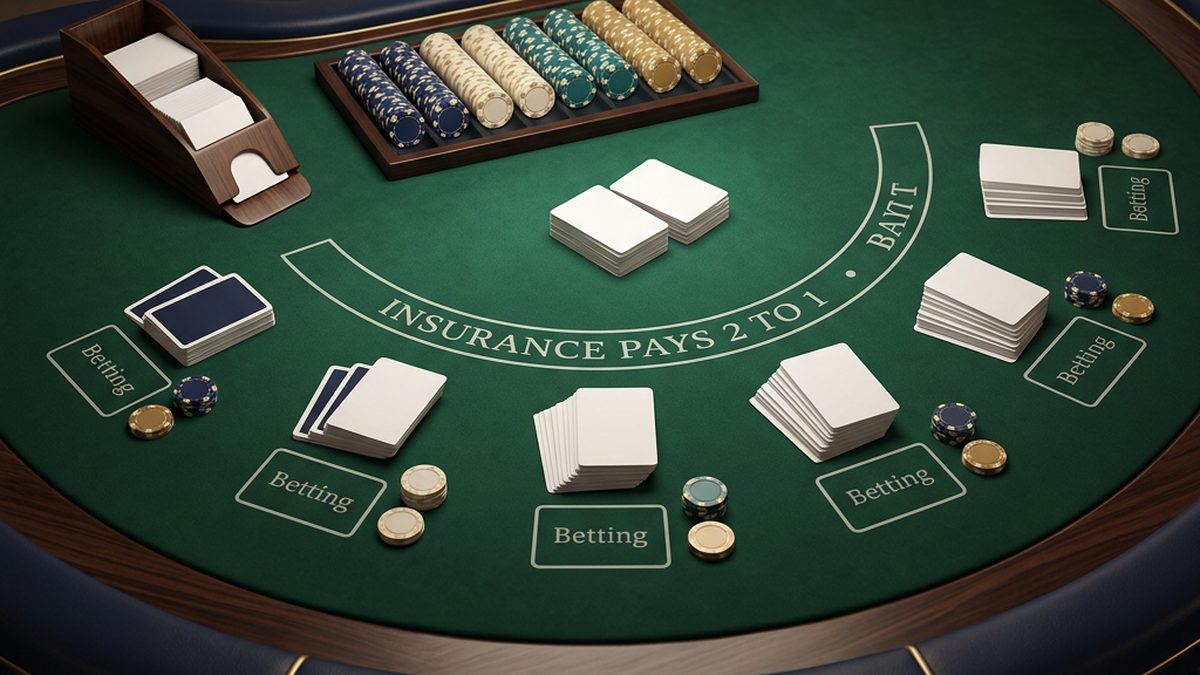
Blackjack is the thinking player's casino game. Unlike a slot, your decisions genuinely affect the outcome — and played correctly, blackjack carries one of the lowest house edges anywhere in the casino. That is exactly why it rewards understanding. Here are the rules that actually matter, why the edge is so low, how basic strategy works, the table rules that quietly move the odds, and the real difference between playing against software and against a live dealer.
The rules in brief
The goal is simple: beat the dealer's hand without going over 21. Cards two through ten are worth their face value, face cards are worth ten, and an ace counts as one or eleven, whichever helps you. You are dealt two cards and decide whether to "hit" (take another card), "stand" (keep your total), "double down" (double your bet for one more card), or "split" (separate a pair into two hands). The dealer plays by fixed rules — typically drawing until they reach 17 — which removes their judgement from the equation and is the key to why the game is beatable in the value sense.
Why the house edge is so low
Played with correct strategy, blackjack’s house edge can sit around 0.5% — far lower than most slots or other table games, and in the best rule sets lower still. That is because your choices matter: every decision either narrows or widens the gap between you and the dealer. The catch is "played correctly". The low edge assumes you make the mathematically best decision in every situation; play on instinct and the edge climbs fast. We explain how the house edge works across games on our table games hub, but blackjack is the clearest example of a game where skill genuinely moves the number.
Basic strategy: the part that matters
Basic strategy is the set of mathematically optimal decisions for every combination of your hand and the dealer's upcard. It has been worked out exhaustively — when to hit, stand, double or split is not a matter of opinion but of probability. You do not need to memorise it to start; printable strategy charts exist, and online blackjack lets you consult one as you play. Using basic strategy is the single biggest thing you can do to keep the house edge at its minimum. Ignoring it is the single biggest way to hand the casino more than it is owed — weak instinctive play can push the edge from around 0.5% up past 2%, quadrupling what the game costs you.
The decisions that cost players the most
You don't need to memorise the whole strategy chart to avoid the worst mistakes — a handful of decisions account for most of the money players hand over unnecessarily. Get these right and you've closed most of the gap between instinctive play and optimal play.
The first is standing on a hard 16 against a dealer's high card. It feels reckless to hit 16 and risk busting, so players stand — but against a dealer showing 7 or higher, standing is the losing play more often than not, and basic strategy says hit (or surrender if allowed). The second is failing to double down when you should. Doubling on a hard 11, or a 10 against a weak dealer card, is one of the biggest edges the game offers you, yet nervous players just hit instead and leave value on the table. The third is mishandling pairs: always splitting aces and eights, and never splitting tens or fives, is a rule that trips up players who split on instinct rather than maths. And the fourth is playing soft hands timidly — a soft 17 (ace-six) should almost never be stood on, because the ace gives you a free swing at improving with no bust risk.
None of this requires card counting or a system. It's just knowing the four or five spots where instinct and probability part ways, and trusting the maths in those moments. That alone keeps you close to the game's best-case house edge.
Bankroll and session discipline
Blackjack's low house edge is only an advantage if you give it time to matter, and that means managing your bankroll rather than your luck. Decide before you sit down what you're willing to lose for the session, and split it into unit bets small enough that a normal losing run can't wipe you out in a few hands — a common approach is keeping each bet to a small fraction of your session bankroll, so variance has room to even out. The low edge works in your favour over many hands; it can't help you if you've staked your whole balance on three of them.
Just as important is resisting the urge to raise your stakes to chase a loss. Blackjack has swings like any game, and a cold run doesn't mean a hot one is owed to you — the same independence that governs slots applies to the shuffle. The players who get the most from blackjack are the ones who bet consistently, play the maths, and walk away at a limit they set in advance, rather than letting a bad patch talk them into bigger bets. The game rewards patience; it punishes tilt.
The table rules that move the odds
Not all blackjack tables are equal, and the rules printed on the felt (or in the game-information screen online) change the house edge before you've made a single decision. These are the ones worth checking — the first is the most important bet you'll make all night, and you make it just by choosing the table:
| Rule | Effect on house edge | What to do |
|---|---|---|
| Blackjack pays 3:2 | Baseline (best) | Always prefer this |
| Blackjack pays 6:5 | Adds ~1.4% — a huge penalty | Avoid these tables |
| Dealer stands on soft 17 | Better for you | Prefer |
| Dealer hits soft 17 | Adds ~0.2% | Mild negative |
| Double after split allowed | Saves ~0.15% | Prefer |
| Surrender allowed | Saves ~0.05–0.08% | A small bonus |
| Fewer decks | Slightly better odds | Prefer where available |
The one that matters most by far is the payout for a natural blackjack. A table paying 3:2 gives you £15 on a £10 blackjack; a 6:5 table gives you just £12 for the same hand. That single change adds around 1.4% to the house edge — enough to turn blackjack from one of the best bets in the casino into a mediocre one, roughly on a par with a slot. You'll hit a natural about once every 21 hands, so it adds up quickly. The rule is simple: check the payout before you sit down, and if it's 6:5, find another table. No amount of good strategy rescues a 6:5 game.
RNG vs live blackjack
Online, you will find two kinds of blackjack. RNG blackjack is software-based: instant, playable at any stake, no waiting, and ideal for working through strategy at your own pace — you can sit with a strategy chart open and take every decision slowly. Live blackjack streams a real dealer and real cards from a studio, with the atmosphere and pacing of a physical table. The underlying maths is the same; the experience is not. RNG suits speed and practice; live suits players who want the feel of the real thing. Note that some live tables share one dealer across many players, which can be slower but adds to the social atmosphere — and check the live table's payout rule too, since live blackjack is not automatically 3:2.
Bonuses, weighting and blackjack
One thing blackjack players learn the hard way: casino bonuses rarely favour the table. Because blackjack has such a low house edge, most casinos weight it lightly toward bonus wagering — often 10% or less, sometimes zero — so a bonus you planned to clear on blackjack can require many times more staking than the headline suggests. Before claiming any offer as a blackjack player, read the game-weighting term carefully. Our Casino Bonuses guide walks through exactly how weighting works and why a slots-weighted bonus is often near-useless at the tables.
A note on side bets and responsible play
Many blackjack tables offer side bets — extra wagers on things like the dealer's cards or pairs (Perfect Pairs, 21+3, and similar). They can be fun, but they almost always carry a much higher house edge than the main game — often several percent — so they work against the very thing that makes blackjack good value. The same goes for insurance, offered when the dealer shows an ace: it's a side bet dressed up as protection, and over time it costs you. Treat all of these as entertainment, not strategy. And as with any casino game, set a budget before you sit down, never chase losses, and use the deposit and time limits your casino provides. Support is available via GamCare and the National Gambling Helpline on 0808 8020 133. 18+ only.
Online Blackjack — Your Questions Answered
Does blackjack really have a low house edge?
Yes — played with correct basic strategy, the house edge can be around 0.5%, among the lowest in the casino. But that low figure assumes you make the optimal decision every hand and play a 3:2 table; playing on instinct or at a 6:5 table raises the edge considerably.
What is basic strategy?
It is the mathematically optimal decision for every combination of your hand and the dealer’s upcard — when to hit, stand, double or split. It has been calculated exhaustively, and using it keeps the house edge at its minimum. Strategy charts are widely available.
What is the difference between RNG and live blackjack?
RNG blackjack is software-based — instant, any stake, no waiting — and great for practice. Live blackjack streams a real dealer and cards from a studio for atmosphere. The maths is the same; the experience differs.
Why should I avoid 6:5 blackjack tables?
A 6:5 payout for a natural blackjack pays less than the standard 3:2, adding roughly 1.4% to the house edge — enough to turn one of the casino’s best bets into a mediocre one. Always check the payout and prefer 3:2 tables.
Are blackjack side bets worth it?
They can be fun but usually carry a much higher house edge than the main game, working against blackjack’s good value. Treat them as occasional entertainment, not a strategy. The same applies to insurance.
See our full list of verified licensed British casinos — every casino checked against the UKGC public register.
Find blackjack casinos →18+ only. Please gamble responsibly.
Free help available: begambleaware.org | Helpline: 0808 8020 133
Related Posts